Showing posts with label Painting. Show all posts

Saturday, December 7, 2013

A Cubist Approach to Watercolour Painting

One of the aspects of painting that my students generally enjoy is experimenting with media and in particular, watercolour. Most have used watercolours before, but have long since moved on to acrylics. However, with their drawing and painting skills now reaching a more sophisticated level, it was nice to return to watercolours to compare the differences in technique. My students recently spent some time investigating watercolours and the variety of approaches that are possible.

They initially began by working quite traditionally by painting a series of close-up still life pieces and flower studies inspired by the works of Georgia O’Keefe. However, for their major piece we looked at other approaches to seeing the world around them by investigating the analytical approach to painting that was adopted by the Cubists. By using multiple photographic views of a selected scene, the students began to cut up their printouts and recompose them on A4 paper. The finished product was then enlarged by photocopier and traced through with pencil onto watercolour paper. Emphasis was placed upon clearly delineating the various facets of the composition. As they painted, the students were encouraged to combine various watercolour techniques (i.e. wet on dry, wet on wet and the use of salt) and not to feel bound by realistic colours schemes.

The end results were both bold and vibrant. By adopting this approach, many reflected that their final piece was in most cases completely different than what they had imagined and allowed them to see their subject matter through fresh eyes.



Friday, November 9, 2012

Self Portraits

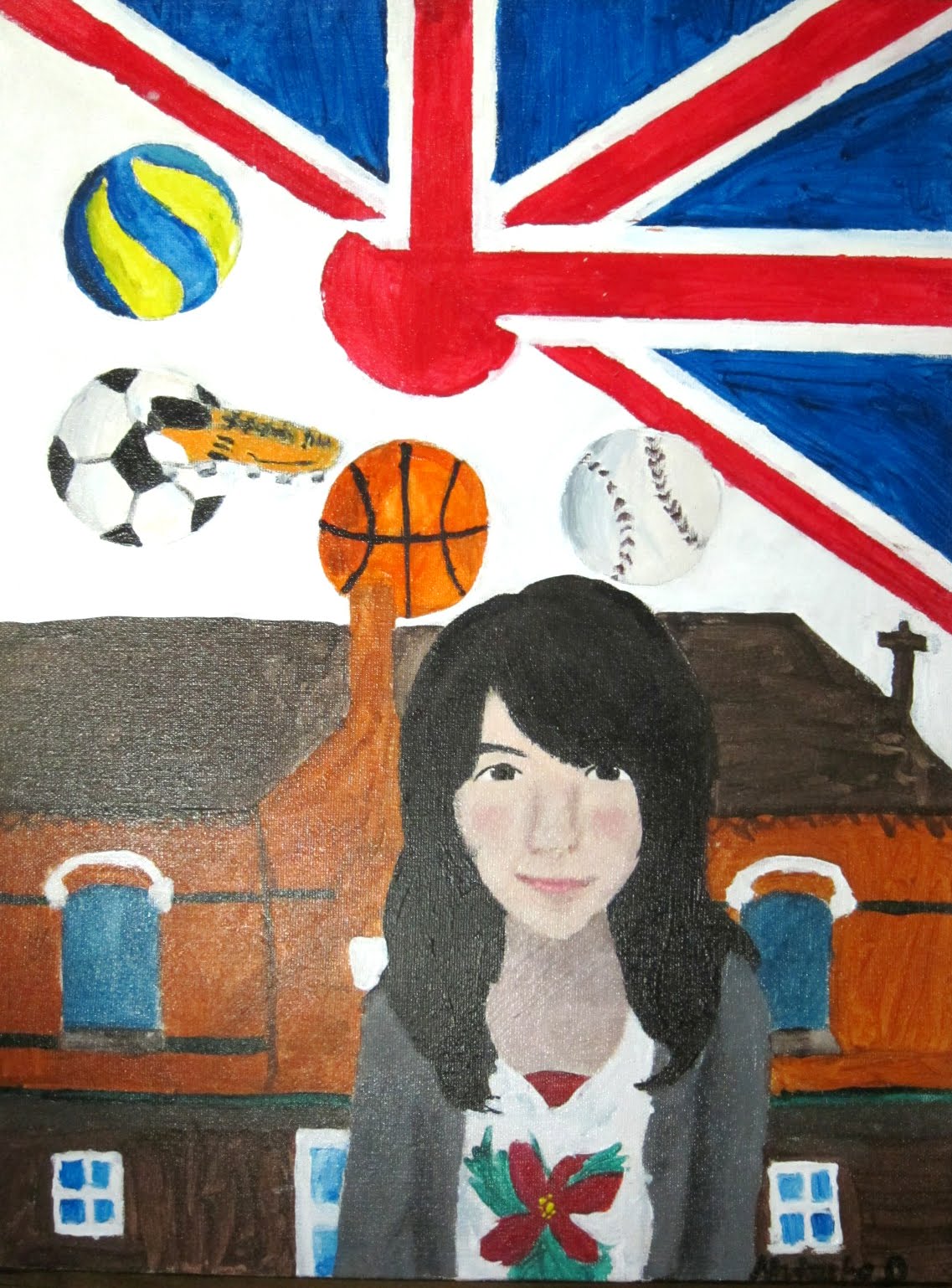
One of the major painting projects that my grade 8’s undertake is a self-portrait. This is a particularly challenging task even for the most experienced of artists, but every time we undertake this task I am always amazed by what they manage to achieve. As well as looking at a range of painters and their various techniques, we spend quite a bit of time investigating and considering both subject and composition. Through discussion and research the painting inevitably becomes more than just a self-portrait, but a visual statement about themselves and the various facets of their lives. We explore the theme of ‘Relationships’ by looking at aspects of context, cycles, culture and self that eventually become intertwined in the painting. Through this process students become increasingly aware of the significance of painting in creating an artifact of its time, which is carefully created by the very person who is the actual subject matter of the work. As a result this piece is probably the most valued piece of artwork created by the students during the year and always attracts great interest in the school when the collective portraits are displayed.

Saturday, September 15, 2012

Overlapping Images

My grade 10 painting class was investigating the works of Cubist and Futurist painters and was set a task of visually deconstructing an object from home in a drawing, then reconstructing the images to form a composition for a painting. The aim wasn’t particularly to focus on details, but more the shapes, both positive and negative, that made up the form. With various images overlapping, the students then chose a simple colour scheme to differentiate the various shapes. Each student took their own approach to the painting style; some painted with flat areas of colour while others were more tonal. The only insistence was that the colours were mixed and not straight from the bottle. The end results were visually strong and certainly showed an alternative approach toward observation drawing.

Friday, September 14, 2012

Reflections and Distortion

In order to provide my grade 9 painting class a different perspective on their world I set them a little task to produce a small self portrait as seen through the viewpoint of a reflection from a spoon. This really became an exercise in observation as they looked deeply into what was effectively a small concave or convex mirror to provide a somewhat distorted image of themselves. To highlight the shininess of the spoon they were also asked to paint directly onto black paper, which most had never done before. While the students tended to provide a stylised version of their portrait, their handling of the overall form and the background was interesting and they were pleased with the results.

Friday, September 7, 2012

Painting the Human Skull

My painting class was investigating colour mixing and in particular the use of ‘neutrals’ (black, white and grey). So they were given a task of drawing a human skull; three of which were generously loaned to us by our science department (the plastic variety of course). As a sideline we talked about the uniformity of most skulls compared to the uniqueness of the human face. Many students had never held a skull in the hands let alone drawn one before, so there was a macabre fascination in the exercise. After creating their initial drawing on buff sheet of paper they mixed black and white paint to shape and follow the contours of the skeletal form, paying attention to interplay of light and shade.

Wednesday, August 29, 2012

Surrealism Inspired Painting

In looking at the wonderful world of surrealist painting my grade 11 Painting class began to investigate at the works of RenĂ© Magritte and in particular ‘Les Valeurs Personnelles’ (Personal Values), 1952. Technically this piece is beautifully painted, but what was of particular interest was Magritte’s sophisticated use of scale and composition. With this in mind we headed to the computer room where students were given a list of 10 random objects to Google. Each Image was saved then the students were asked to use Photoshop to crop and position a number of them into a desirable composition. Emphasis was not only placed on the positioning of the image on the page, but the students were also encouraged to adjust the scale to suit the overall composition. By the end of the lesson the final composition was printed to become the basis for a painting on canvas. The random and somewhat disjointed nature of the photos and compositions certainly resulted in some interesting surrealist inspired imagery. It is also fair to say that the careful and realistic painting style provided its own challenges, allowing the students to acquire their own appreciation for Magritte’s talents as an artist.

Hockney-style Portrait Painting

With this painting project my students where looking at the photographic works of David Hockney in order to find inspiration for a self portrait. We were also investigating the way Cubism and Futurism provided a totally different approach in depicting the human form through the process of compositional deconstruction . With this in mind they used a photograph of themselves taken from a front and three quarter angle. Each of the photos were divided which into an even grid format then cut into pieces. Pieces were chosen and rearrange into a desired composition on a blank grid template. This then became the basis for their painting, which was easily enlarged because of the use of the grid. Their choice of colour and painting technique was based upon how they saw themselves and what they considered was most appropriate to the composition.